


Common Name:
Warty Venus Clam
(also known in Portugal as Pé-de-burro)
Scientific Name:
Venus verrucosa (Linnaeus, 1758)
Reproduction Period:
Spring to Summer
(spawning usually occurs between April and June)
Harvesting / Production Areas:
Atlantic and Mediterranean coasts — including areas of Portugal and Europe, in sandy or gravelly seabeds.
Packaging:
Bioline mesh
1 kg, 2 kg or 5 kg bags
Sizes:
Medium
Large
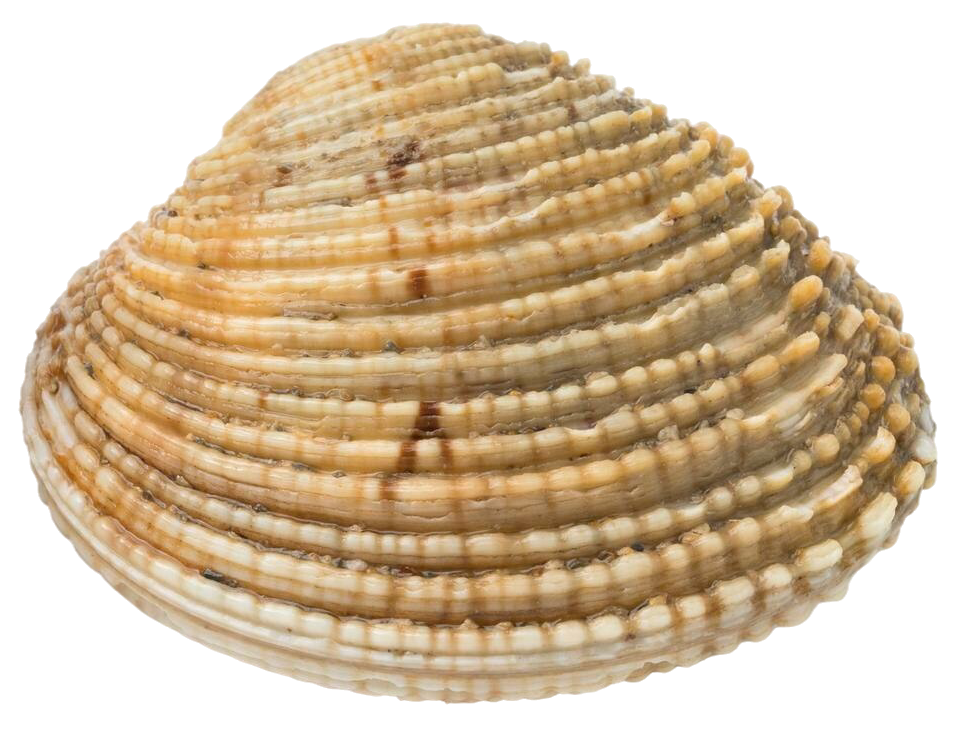
The warty Venus clam is a bivalve mollusc with a robust, oval shell — relatively large for its family — and a very distinctive appearance. It is characterised by pronounced concentric ribs, which at the anterior and posterior edges develop into small nodules or wart-like protrusions, giving the shell an irregular and rugged texture.
The external shell colour ranges from beige to light brown, while the inner surface of the valves is light-coloured, often white.
This bivalve lives buried in sandy or gravelly seabeds — sometimes mixed with mud — from intertidal zones down to depths of around 100 metres. As a filter feeder, it feeds on phytoplankton and suspended organic matter present in the water.
From a gastronomic perspective, the warty Venus clam is highly valued for its flavoursome meat and firm texture, and is considered a delicacy in many markets.
